Digital-age strategies for making depression work for rather than against us by means of art & community as behavior modification.

Showing posts with label Resources. Show all posts

Thursday, February 26, 2009

Survivor Radio cafe


Folks are doing lots of things these days via multi-media to get the word out about how to thrive.

Survivor Radio cafe is just one.

This internet radio show features a LOT of artists, writers, musicians, who healed by creating, by telling their stories.

Watched a documentary about Harvey Milk last night. One of Milk's speeches gave me pause. He said that every gay person had to come out of the closet.

I'm just saying...

What if every survivor of violence came out of the closet?


Tags:


Sunday, April 6, 2008

Mainstreaming Mental Illness :: Advocacy :: Discrimination :: Stigma

The Infinite Mind radio show - hosted by Dr. Peter Kramer - gathered a group of mental health professionals, consumers and activists whose thoughts collected here together speak eloquently to the state of the art of mental illness.

From the show notes:

Right now in the United States, tens of millions of Americans live as part of a minority group that is routinely denied jobs, housing and basic human rights. This group has no widely recognized leaders, no Martin Luther King, Susan B. Anthony or Cesar Chavez. For the 44 million Americans living with mental illness, change is coming through the efforts of unsung heroes and revolutionary, grass-roots approaches to transformation.
This segment explores the discrimination and stigma about mental illness that continues to marginalize people with mental illness and thwart making the best medical practices actual policy. They describe people with mental illness as a minority group that has yet to achieve its rights, comparing the struggle to the civil and human rights movements.
Mental health consumers. Employment opportunities not despite but because of mental illness. Mental illness and the law: self-determination with Psychiatric Advance Directives, a kind of 'living will'. Dignity. Empowerment. Peer support. Peer counseling. Lobbying government. A brief history of the grassroots movement for treatment change. Access to services. There remains states in which the mentally ill are not permitted to vote. Mental Illness = Physical Illness.

Hear for the first time in this radio broadcast about
The Campaign for Mental Health Reform:
The Campaign for Mental Health Reform has been organized as the mental health community’s united voice on federal policy. Its goal is to make access, recovery, coherence, and quality in mental health services the hallmarks of our nation’s mental health system. It works directly with federal policymakers to make this a reality.
Enclosed for distribution to subscribers is the four-page .pdf of the Executive Summary, "Emergency Response: A Roadmap for Federal Action on America’s Mental Health Crisis". The action items are of special note, an easy browse to get a sense of where they want to go with this.

This collection of people have a lot to say about the cutting edge of living with mental illness.

Including this post in the 'Bibliography' category (see sidebar, right) since the radio show and .pdf constitute a collection of names and ideas for interviews and cogitation to which I shall return again and again.

[source]
[listen to the show in Real Player]
[Download the .PDF - Emergency Response: A Roadmap for Federal Action on America’s Mental Health Crisis]


Tags:

Monday, March 31, 2008

Self-Harm Bibliography from the British Journal of Psychiatry - 2004


As late as 2004, British Journal of Psychiatry writer Anthony W. Bateman said this:

The grim truth is that there is no successful treatment for deliberate self-harm (Hawton et al, 2003), although much of the self-help literature urges patients to seek help from professionals.

Perhaps things have changed since 2004. I'm checking it out and will let you know.

What really got to me was another statement by Bateman from the enclosed .pdf:

In the era of user empowerment, people who deliberately harm themselves are a vociferous group who feel let down by professionals.
Yes. Yes, I do feel let down by professionals. In all aspects of recovery and healing. And that disappointment is in part what motivates me to create this documentary.

[download .pdf bibliography]


Tags:

Friday, March 28, 2008

Documentary Media Ripples :: Response


New Seesmic pal Karen responded to THIS video posted to Seesmic via YouTube.


I respond to Karen as above.

I continue to learn how to listen.

In researching "The World's Longest Open Love Letter" documentary I've occasion to search YouTube for folks who speak to mental health issues. Watching these profound stories brought me way down. In the parlance of survivor circles, it's known as 'triggering'.

Rather than fight it, I allowed the spiral to unfold in its way, but with an attempt at keeping my extreme artists eyes, ears and heart open so as to be able to later relate the experience. It inevitably takes longer to process this information than I expect.

Input & consequence.

I've also had occasion to gather a month or two of feedback from colleagues to whom I 'came out' of the depression closet very early on in our social network relationships. Specifically, a 'control group' at Seesmic.

In the midst of the bottom of the spiral down, I posted this entry, a longer-term project illustrating my fascination and irritation with television and film writers for having their characters say, "Are you okay?" sometimes many times per episode.

When I posted it, one of my dear new Seesmic friends - Otir - wrote me comment expressing the hope that i was indeed "Okay."
Otir said...

I hope you're Okay. I know that you are going to be fine. But if you don't feel it, I want you to know that others feel it for you and trust you will. Love.

I loved the mashup. I am so impressed at all the creativity that is there. I am jealous. Yes I am. But I am going to be okay with it :-)


My feeling - having come out - is that anything I do in their eyes is first colored by the knowledge that one of my dearest, oldest - if least respected - friends is chronic depression. Is that a good thing? Maybe. Maybe the support helps rather than hurts. In the middle of the beast, it hurts.

Pain is a red flag indicative of something that requires conscious attention, and is in its own way, another old friend whom I know too well.

Yes. Otir's words of encouragement helped, thought it took some time to get to that place where I could let her loving spirit into my heart. At first, her kind words filled me with dread.

I'm unaccustomed to allowing a support system into the process. Unaccustomed to being 'seen' in this way.

In being seen, I feel vulnerable.

Invisibility was the OLD strategy; being SEEN, the new.

My biggest fear is that friendships and career will be ruined as a result of going public. My online research indicates others go public about craploads of mental health issues in droves. What I see is gutsy stuff. Full of courage, hope and technique.

It's my theory that healing and forgiveness require 'witness', one thing the Catholic Church got right. Posting videos about one's healing experiences admirably - if somewhat dangerously - fills that need.

The NY Times recently published an interesting tech article about a new social networking site - PatientsLikeMe - that crowdsources data, statistics, charts, medical metrics. For sure, the site bucks the MSM-promoted privacy-before-all-else-for-fear-of-identity-theft or death-by-pervert-stalker trend.

Here's what deputy editor of Wired magazine Thomas Goetz had to say on the subject of the social networking of mental health research:

As diseases go, A.L.S. or M.S. or Parkinson’s or even H.I.V. are relatively rare afflictions, at least in the United States. Mental illness, on the other hand, afflicts a vast swath of the country. Nearly 60 million Americans have a diagnosable mental disorder, according to the National Institute of Mental Health, a population that includes everything from depression to bipolar syndrome to anxiety. For PatientsLikeMe, that population represents a huge market, not to mention the potentially lucrative bounty of data related to antidepressants and other mood-disorder drugs. But it also presents a challenge.

Creating a PatientsLikeMe mental-health community — or as they call it, a “mood community” — requires a new strategy for measuring mental health. The challenge is in part semantic. Where the argot around A.L.S. or M.S. is largely clinical, the vernacular around mental health is more subjective. The official diagnostic criteria for major depression, for example, include “feelings of worthlessness” and “indecisiveness.” So PatientsLikeMe faces an input problem: how to convert the ambiguities of mental illness into metrics?

Whatever its ultimate worth, the site’s answer is elegantly straightforward. Members can update their mood status every hour on a scale of 1 to 4, from very bad to very good. How they feel may be subjective, but the resulting data can be mapped across time. The site treats sessions of therapy as if they were a dose of Prozac; the type of therapy (say, group or individual) stands as the treatment, and the length of a session (say, 50 minutes a week) as the dosage.

We live in interesting times.

Music is "Mother's Blues" from Jeff Kelley's Classic Acoustic Blues album - about whom I've written in this space before.

Tags:

Thursday, March 8, 2007

Bravehearts :: A Position Paper :: Management & Treatment of Child Sex Offenders

Part of the purpose of this blog is to give voice to my continuing research on the subject of childhood sexual abuse.

As part of this research, found Bravehearts.org.au, and in reading Bravehearts' pages, found it to be the first organization that speaks directly to core issues of early identification and treatment of sexual predators.

The enclosed position paper titled "The Management & Treatment of Child Sex Offenders" is spot on the money. Short of time? Go directly to page 20 for conclusions.

A big part of healing is - for some - finding an active role in advocating change.

Here's to healing, to finding healing strategies that work for YOU.


Tags:

Friday, March 2, 2007

PostSecrets :: Secrets & Depression Live Together in Sin


I've loved PostSecrets since I first saw the book. I don't own a copy (yet), but just found the PostSecret website, surfing, and subscribed in Google Reader (which I also love).

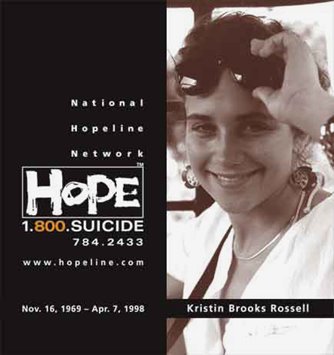
Among this week's posts was one from a reader who'd been helped by having found the above image in the fronticepiece of the book. The reader called the hotline, spoke with someone for 2 hours and was saved from her secret darkness to live another day.

At the core of depression live SECRETS.


PostSecrets gives folks space in which to confess. Publicly. Without fear.

Feels good just to think about sending PostSecret a card.

Send your secret on one side of a postcard to:

PostSecret
13345 Copper Ridge Road
Germantown, Maryland
USA 20874-3454
[instructions / legal stuff]

Holy cow, they're in a 3rd edition! No surprise there.

Get yourself a copy of PostSecret: Extraordinary Confessions from Ordinary Lives.


Creative Commons License
Attribution spec: DepressionStrategies.blogspot.com